Sleep deprivation accelerates Alzheimer’s brain damage (Links to an external site)
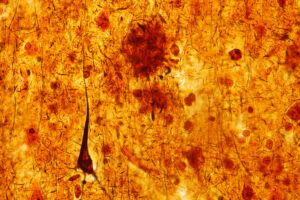
A slice of brain tissue from a person who died with dementia shows an elongated brown triangle – a toxic tangle of tau protein associated with Alzheimer's disease and brain damage. A study in mice and people from Washington University School of Medicine in St. Louis shows that sleep deprivation causes tau levels to rise and tau tangles to spread through the brain, accelerating Alzheimer's brain damage.

Poor sleep has long been linked with Alzheimer’s disease, but researchers have understood little about how sleep disruptions drive the disease. Now, studying mice and people, researchers at Washington University School of Medicine in St. Louis have found that sleep deprivation increases levels of the key Alzheimer’s protein tau. And, in follow-up studies in the […]

Mice sleeping fitfully provide clues to insomnia (Links to an external site)

Researchers at Washington University School of Medicine in St. Louis – working with mice with sleep problems similar to those experienced by people with the genetic disease neurofibromatosis type 1 (NF1) – believe the animals will help shed light on insomnia linked to NF1 or other factors.

Mice that sleep fitfully could help researchers unravel the mystery of insomnia. Researchers at Washington University School of Medicine in St. Louis studied mice genetically modified to mimic the genetic disease neurofibromatosis type 1 (NF1), which is associated with sleep problems. They found that the animals, like some people with NF1, slept in short, irregular […]

Alzheimer’s Disease May Develop Differently In African-Americans, Study Suggests (Links to an external site)

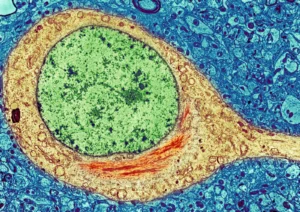
A colorized image of a brain cell from an Alzheimer's patient shows a neurofibrillary tangle (red) inside the cytoplasm (yellow) of the cell. The tangles consist primarily of a protein called tau.

Scientists have found a biological clue that could help explain why African-Americans appear to be more vulnerable than white Americans to Alzheimer’s disease. A study of 1,255 people, both black and white, found that cerebrospinal fluid from African-Americans tended to contain lower levels of a substance associated with Alzheimer’s, researchers report Monday in the journal JAMA Neurology.

Racial differences in Alzheimer’s disease unveiled (Links to an external site)

A new study at Washington University School of Medicine in St. Louis finds disparities between African-Americans and Caucasians in a key biomarker for Alzheimer’s disease – suggesting that tools to diagnose the disease in Caucasian populations may not work as well in African-Americans.

African-Americans may be twice as likely as Caucasian Americans to develop Alzheimer’s disease, but nobody knows why because studies investigating the underlying causes of illness have historically drawn from a nearly all-white pool of research participants. Consequently, little is known about how the neurodegenerative disease arises and progresses in people of non-Caucasian backgrounds.

People who act out dreams needed for study (Links to an external site)

Acting out dreams can be an early sign of serious neurological disease. A new study aims to identify which people with the disorder will go on to develop neurodegenerative diseases such as Parkinson’s, and to lay the groundwork to test treatments aimed at preventing such diseases.

Picture this: A soccer referee, dreaming he’s on the pitch, flings his arm up with an imaginary red card and accidentally smacks his sleeping partner in the face. Funny? Maybe on TV. In real life, acting out dreams is not only bad for domestic harmony, it can be a warning sign of looming neurodegenerative disease.