People who act out dreams needed for study (Links to an external site)
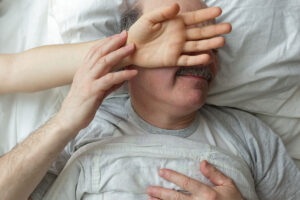
Acting out dreams can be an early sign of serious neurological disease. A new study aims to identify which people with the disorder will go on to develop neurodegenerative diseases such as Parkinson’s, and to lay the groundwork to test treatments aimed at preventing such diseases.

Picture this: A soccer referee, dreaming he’s on the pitch, flings his arm up with an imaginary red card and accidentally smacks his sleeping partner in the face. Funny? Maybe on TV. In real life, acting out dreams is not only bad for domestic harmony, it can be a warning sign of looming neurodegenerative disease.

Brain tumors occur often in kids with common genetic syndrome (Links to an external site)

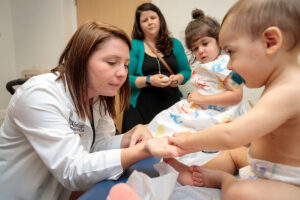
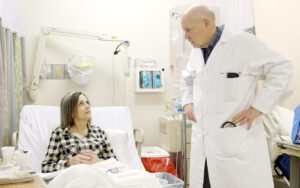
Stephanie Morris, MD, examines Henry Shrinivas, 1. Both Henry and his sister Sophie, 2, have been diagnosed with neurofibromatosis (NF1), a common genetic syndrome. A new study shows that children with NF1 are much more likely to have brain tumors than previously thought.

The frequency of brain tumors has been underestimated in children with the common genetic syndrome neurofibromatosis type 1 (NF1), according to a new study. This disorder is characterized by birthmarks on the skin and benign nerve tumors that develop in or on the skin. Brain tumors also are known to occur in children and adults […]

New ALS therapy in clinical trials (Links to an external site)

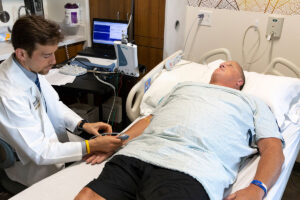
Robert Bucelli, MD, PhD, measures Gregory Easter's neuromuscular function. Easter, who has an inherited form of amytrophic lateral sclerosis, a fatal neuromuscular disease, is taking part in a clinical trial to evaluate an experimental drug. New research at Washington University School of Medicine in St. Louis shows the drug extends survival and reverses some neuromuscular damage in mice and rats and may help people whose disease is caused by mutations in the gene SOD1.

About 20,000 people in the United States are living with amyotrophic lateral sclerosis (ALS), also known as Lou Gehrig’s disease. The invariably fatal disease kills the nerve cells that control walking, eating and breathing. Few people survive more than three years after diagnosis.

Can fasting improve MS symptoms? (Links to an external site)

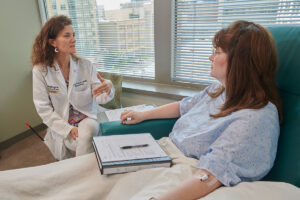
Laura Piccio, MD, talks with DeAnna Clark during a checkup. Clark, who has MS, is participating in a study led by Piccio to evaluate whether partial fasting can benefit people with MS.

People with multiple sclerosis (MS) can find an abundance of conflicting advice suggesting that special diets – everything from avoiding processed foods to going low-carb – will ease their symptoms. But the evidence is scanty that dietary changes can improve fatigue or other MS symptoms.