Investigational Alzheimer’s drug improves biomarkers of the disease (Links to an external site)

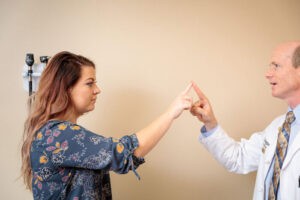
Randall Bateman, MD, director of the Dominantly Inherited Alzheimer Network-Trials Unit (DIAN-TU), an ongoing international clinical trial to evaluate experimental Alzheimer’s drugs, speaks with DIAN-TU participant Taylor Hutton. One of the drugs tested in the DIAN-TU, gantenerumab, improved biomarkers of disease despite unclear cognitive effects, prompting study leaders to offer participants the option of continuing to receive the drug and participate in follow-up examinations as part of a so-called open label extension.

An investigational Alzheimer’s drug reduced molecular markers of disease and curbed neurodegeneration in the brain, without demonstrating evidence of cognitive benefit, in a phase 2/3 clinical trial led by researchers at Washington University School of Medicine in St. Louis through its Dominantly Inherited Alzheimer Network-Trials Unit (DIAN-TU). These results led the trial leaders to offer the drug, […]

International Alzheimer’s clinical trial to test tau drugs (Links to an external site)

Clinical trial participant Taylor Hutton (left) meets with Randall J. Bateman, MD, director of the global DIAN-TU Alzheimer’s clinical trial in 2018. Hutton’s family has a history of early-onset Alzheimer’s disease. The DIAN-TU is launching three new arms to evaluate experimental Alzheimer’s drugs targeting the protein tau. (Photo: Matt Miller/School of Medicine)

A worldwide clinical trial aimed at finding treatments for Alzheimer’s disease has expanded to include investigational drugs targeting a harmful form of the brain protein tau. The trial, known as the Dominantly Inherited Alzheimer Network Trials Unit (DIAN-TU) and led by Washington University School of Medicine in St. Louis, launched in 2012 as the first […]

Why doesn’t deep-brain stimulation work for everyone? (Links to an external site)

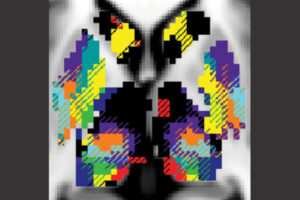
Brain networks corresponding to functions such as vision (blue) and attention (green) mingle and share information in structures deep inside the brain, as seen, for example, in the bottom right corner of this color-coded composite MRI image. Researchers at Washington University School of Medicine in St. Louis have mapped nine functional networks in the deep-brain structures of 10 healthy people, an accomplishment that could lead to improvements in deep-brain stimulation therapy for severe cases of Parkinson’s disease and other neurological conditions. (Image: Scott Marek)

People with severe Parkinson’s disease or other neurological conditions that cause intractable symptoms such as uncontrollable shaking, muscle spasms, seizures, obsessive thoughts and compulsive behaviors are sometimes treated with electric stimulators placed inside the brain. Such stimulators are designed to interrupt aberrant signaling that causes the debilitating symptoms. The therapy, deep-brain stimulation, can provide relief […]