An Army Buddy’s Call For Help Sends A Scientist On A Brain Injury Quest

When Chris Moroski was hurt in 2005, “head injuries weren’t really a thing,” he recalls. “No one really considered why I was vomiting all the time. No one considered that it was probably from a concussion.” Ellen Webber for NPR

Katherine Du/NPRThe first time Kit Parker’s phone rang, everything seemed fine. It was January 2006, and Parker’s old Army buddy Chris Moroski was calling to say hi. Parker and Moroski had jumped out of airplanes together in the 1990s when they were paratroopers in the National Guard. But after the attacks on Sept. 11, Parker […]

Brain imaging links Alzheimer’s decline to tau protein

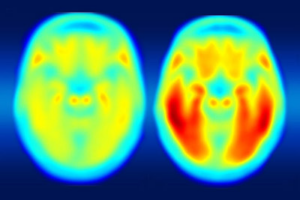
A study using a new PET imaging agent shows that measures of tau protein in the brain more closely track cognitive decline due to Alzheimer’s disease compared with long-studied measures of amyloid beta. More red color indicates more tau protein. The image on the left shows the average tau accumulation in the brains of cognitively normal people, averaged over many individuals. The image on the right shows the average amount of tau buildup in the brains of multiple people with mild Alzheimer’s symptoms. Scanning multiple individuals shows that the intensity of tau deposits correlates with the severity of cognitive dysfunction. (Image: Matthew R. Brier)

Tau is better marker of progression to Alzheimer’s disease than amyloid beta A buildup of plaque and dysfunctional proteins in the brain are hallmarks of Alzheimer’s disease. While much Alzheimer’s research has focused on accumulation of the protein amyloid beta, researchers have begun to pay closer attention to another protein, tau, long associated with this […]

Problems finding your way around may be earliest sign of Alzheimer’s disease, study suggests

Participants in this Alzheimer’s disease study used a joystick to navigate a virtual maze and locate landmarks, such as this bookcase. (Image courtesy of Denise Head)

Navigation skill test could diagnose brain changes long before memory fails Long before Alzheimer’s disease can be diagnosed clinically, increasing difficulties building cognitive maps of new surroundings may herald the eventual clinical onset of the disorder, finds new research from Washington University in St. Louis.“These findings suggest that navigational tasks designed to assess a cognitive […]

Washington University ‘Memory Hackers’ featured on PBS/NOVA

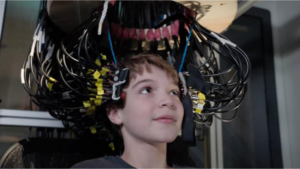
Washington University research on Jake Hausler, a St. Louis child with Highly Superior Autobiographical Memory, will be featured on the PBS/NOVA special “Memory Hackers.”

Several Washington University in St. Louis faculty will be featured in a new NOVA special on the science of human memory scheduled to air Wednesday, Feb. 10, on PBS stations across the nation. In the program, titled “Memory Hackers,” NOVA explores the cutting edge frontiers of cognitive science and molecular biology, where neuroscientists are probing […]

Alzheimer’s drug test disappoints, but some see benefit

891 patients with mild or moderate Alzheimer’s disease participated in study By Susan Scutti CNNPOSTED: 8:27 AM PDT July 27, 2016 UPDATED: 10:47 AM PDT July 27, 2016Health, medical research(CNN) –The latest round of testing for a new Alzheimer’s drug didn’t produce the results researchers hoped for, but a small number of patients did see […]

Dancing To Ease Disease: Tango With A Beneficial Beat

Instructor Laura Richling leads a dance class for Parkinson’s disease patients and their caregivers at Hartford Hospital’s Movement Disorders Center in Vernon. Richling is affiliated with Dancing with Parkinson’s Disease, based in Brooklyn, N.Y., and the Neighborhood Music School in New Haven. (Cloe Poisson / cpoisson@courant.com)

More and more doctors are writing an unusual prescription for their patients withParkinson’s disease: Go out dancing and call me in the morning. A growing body of research suggests that dance, notably the tango, can improve balance, strength and walking ability in people with neurological disorders, including Parkinson’s disease, Alzheimer’s and other forms of dementia, […]

Brain’s ability to dispose of key Alzheimer’s protein drops dramatically with age

The greatest risk factor for Alzheimer’s disease is advancing age. After 65, the risk doubles every five years, and 40 percent or more of people 85 and older are estimated to be living with the devastating condition. Researchers at Washington University School of Medicine in St. Louis have identified some of the key changes in […]

Bateman receives MetLife Award for Alzheimer’s research

Physician-scientist is fifth School of Medicine winner Randall J. Bateman​, MD, the Charles F. and Joanne Knight Distinguished Professor of Neurology at Washington University School of Medicine in St. Louis, received a MetLife Foundation Award for Medical Research on July 20 in Washington. Bateman and this year’s other honoree, German researcher Christian Haass, MD, have […]