Blood test IDs key Alzheimer’s marker (Links to an external site)
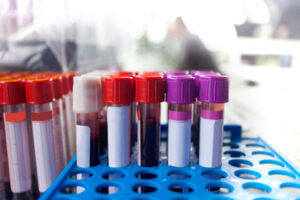
A study led by researchers at Washington University School of Medicine in St. Louis suggests that measures of amyloid beta in the blood have the potential to help identify people with altered levels of amyloid beta in their brains or cerebrospinal fluid. Ideally, a blood-based screening test would identify people who have started down the path toward Alzheimer’s years before they could be diagnosed based on symptoms. (Getty Images)

Decades before people with Alzheimer’s disease develop memory loss and confusion, their brains become dotted with plaques made of a sticky protein – called amyloid beta – that is thought to contribute to the disease and its progression. Currently, the only way to detect amyloid beta in the brain is via PET scanning, which is […]

Stop Alzheimer’s before it starts (Links to an external site)

In 2015, the global cost of Alzheimer’s disease was US$818 billion. That’s similar to the gross domestic product of the world’s 18th-largest economy. By 2030, the number of people with the disease is expected to rise to more than 70 million worldwide (see ‘Staying ahead’).

Just one night of poor sleep can boost Alzheimer’s proteins (Links to an external site)

SLEEP DEEP Slow-wave sleep, the deepest stage of sleep, may keep the brain from accumulating proteins that can lead to Alzheimer’s. DNF-STYLE/ISTOCKPHOTO

How well, not how much, people sleep may affect Alzheimer’s disease risk. Healthy adults built up Alzheimer’s-associated proteins in their cerebral spinal fluid when prevented from getting slow-wave sleep, the deepest stage of sleep, researchers report July 10 in Brain. Just one night of deep-sleep disruption was enough to increase the amount of amyloid-beta, a protein that […]

How Seniors Are Driving Safer, Driving Longer (Links to an external site)

Americans love to drive. More than 75 percent of adults carry a driver’s license, including 40 million who are 65 and older. But driving is more than just a passion or a pastime: It’s a lifeline. Studies show that giving up driving increases a person’s mortality risk and makes seniors more likely to land in […]

Antibody Makes Alzheimer’s Protein Detectable in Blood (Links to an external site)

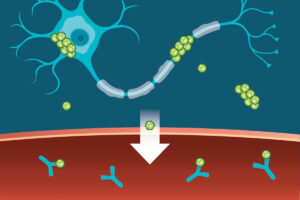
Caption: The protein tau (green) aggregates abnormally in a brain cell (blue). Tau spills out of the cell and enters the bloodstream (red). Research shows that antibodies (blue) can capture tau in the blood that reflect its levels in the brain. Credit: Sara Moser

Age can bring moments of forgetfulness. It can also bring concern that the forgetfulness might be a sign of early Alzheimer’s disease. For those who decide to have it checked out, doctors are likely to administer brief memory exams to assess the situation, and medical tests to search for causes of memory loss. Brain imaging […]

Antibody helps detect protein implicated in Alzheimer’s, other diseases (Links to an external site)

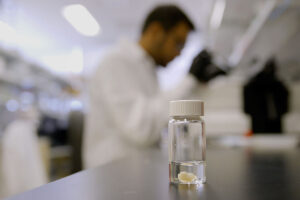
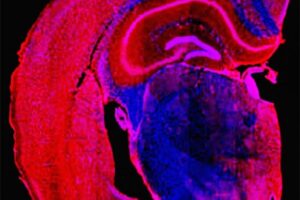
Researchers use mouse brains (above) to study ways to measure the brain protein tau, which plays a role in neurodegenerative diseases such as Alzheimer's. A team led by scientists at Washington University School of Medicine in St. Louis has found a way to measure tau levels in the blood. The study, in mice and a small group of people, could be the first step toward a noninvasive test for tau.

Damaging tangles of the protein tau dot the brains of people with Alzheimer’s and many other neurodegenerative diseases, including chronic traumatic encephalopathy, which plagues professional boxers and football players. Such tau-based diseases can lead to memory loss, confusion and, in some, aggressive behavior. But there is no easy way to determine whether people’s symptoms are linked to […]

Distinguished Faculty, Goldstein honors awarded (Links to an external site)

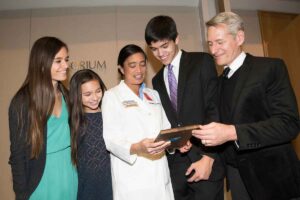
Lisa Moscoso, MD, PhD, associate dean for student affairs, shows her family the Samuel R. Goldstein Leadership Award in Medical Student Education that she received Feb. 15 at the Distinguished Faculty Awards ceremony on the Medical Campus. Shown are (from left) Moscoso's daughters Annalise and Lizzie Wagner; Moscoso; her son, John Harry Wagner; and her husband, Tom Wagner, PhD.

Several Washington University School of Medicine faculty members recently were honored with Distinguished Faculty Awards for their wide-ranging achievements, dedication and talent. The recipients were nominated by their peers to recognize achievements in clinical care, community service, research and teaching. They received the awards in a ceremony Feb. 15 at the Eric P. Newman Education Center on […]

Designer compound may lead to new dementia treatment (Links to an external site)

Scientists from the National Institutes of Health used a designer compound to prevent and reverse dementia-like brain damage caused by toxic tau protein in mice. Photo courtesy of Miller lab, Washington University,

Feb. 8 (UPI) — Research from the National Institutes of Health, or NIH, suggests the potential to prevent or reverse brain damage caused by tau protein in dementia patients. The study of mice and monkeys showed that tau antisense oligonucleotides, which are genetically engineered to block a cell’s production of tau, have the potential to treat […]

Drug compound halts Alzheimer’s-related damage in mice

Tau oligos

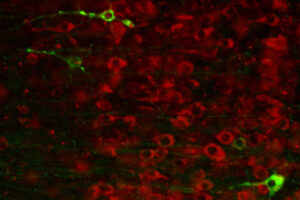
In some people, the brain protein tau collects into toxic tangles that damage brain cells and contribute to diseases such as Alzheimer’s. Researchers at Washington University School of Medicine in St. Louis have found a drug that can lower tau levels and prevent some neurological damage. In neurons that contain the drug (above, in red) […]