New Qalsody Results Bring Hope for Recovery of Lost Function and More Time (Links to an external site)

For decades, the general consensus among neurologists and neuroscientists has been that ALS treatments would only be able to slow down or stop further progression of the disease. Function that had already been lost would probably not be recovered. But now, evidence is emerging that not only is functional improvement possible, it’s happening for some people […]

Fatal neurodegenerative disease in kids also affects the bowel (Links to an external site)

Researchers at WashU Medicine have described the neurodegeneration that occurs in the nervous system of the bowel in Batten disease, a rare and fatal genetic condition. In their latest study, a team led by Jonathan Cooper, professor of pediatrics (left), showed that gene therapy to the bowel in mice modeling Batten disease reduced symptoms and extended lifespan. Also pictured are co-first authors Ewa Ziółkowska (center), a postdoctoral research associate, and Matt Jansen, a graduate student. (Photo: Matt Miller/WashU Medicine)

As a leading researcher of rare diseases that affect children’s brains, Jonathan D. Cooper, PhD, thought little about the gastrointestinal (GI) system. That is, until the parents of children with a condition that Cooper studies urged him to investigate why debilitating digestive issues troubled their kids, who suffer from an incurable and fatal neurodegenerative brain condition […]

Could inhaling xenon gas help treat Alzheimer’s? A new mouse study suggests it might (Links to an external site)

A medical device used for xenon therapy. Adobe

The gas xenon, like the other noble, or inert, gases, is known for doing very little. The class of elements, because of its molecular structure, don’t typically interact with many chemicals.  But a new mouse study shows one possible use case for xenon — as a treatment for Alzheimer’s disease. The paper, published Wednesday in Science Translational […]

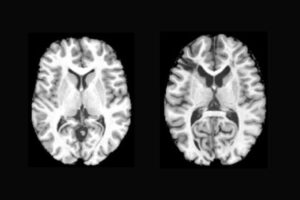
Brain structure differences provide clues to substance use risks (Links to an external site)

WashU researchers found correlations between certain types of brain structure and youth who try substances before age 15. (Photo: Shutterstock)

When studying substance use disorders, scientists had thought some of the effects on the brain could stem from use of the substances themselves: People start drinking alcohol in early teens, that alcohol has a neurotoxic effect on the developing brain that begets more alcohol drinking, and a similar dynamic occurs with other substances. But research […]

Major Depression in Older Adults Tied to Risky Driving Behaviors (Links to an external site)

Older adults with major depressive disorder (MDD) exhibit riskier driving behaviors than their nondepressed peers, including hard braking, cornering, and unpredictable driving patterns, new research showed. Data for the study came from commercial vehicle data trackers installed in participants’ vehicles. After about a year of follow-up, investigators found that MDD was associated with an increase […]

Vagus nerve stimulation relieves severe depression (Links to an external site)

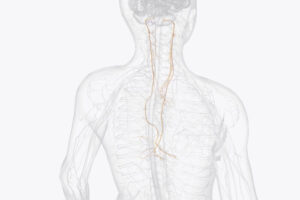
The vagus nerves (orange) run from the brain through the neck to the internal organs. People with severe, treatment-resistant depression who received vagus nerve stimulation therapy showed improvement in depressive symptoms, quality of life, and ability to complete the tasks of daily life, according to a national clinical trial led by researchers at WashU Medicine.

People with severe, treatment-resistant depression who received a nerve-stimulating therapy showed significant improvement in depressive symptoms, quality of life and ability to complete everyday tasks after a year, according to the results of a national, multicenter clinical trial led by Washington University School of Medicine in St. Louis.  The findings are published Dec. 18 in a […]

Grant will fund development of vaccines to prevent dementia (Links to an external site)

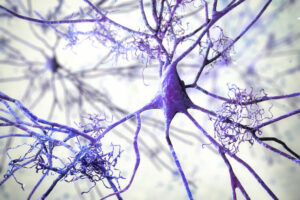
An illustration of what neuronal networks look like as they degrade. WashU researchers are working to design vaccines that could potentially prevent the buildup of inflammatory protein accumulations in the brain, which is one of the precursors to developing Alzheimer’s disease. (Image: Shutterstock)

Alzheimer’s disease and frontotemporal dementia are devastating disorders that emerge following the buildup of misfolded proteins in the brain. The newest generation of Alzheimer’s therapeutics targets accumulations of the protein amyloid beta with engineered antibodies, but the results have been underwhelming, with some adverse effects, not to mention using engineered antibodies can be prohibitively expensive.

WashU Medicine reaches all-time high in NIH funding (Links to an external site)

Person in lab coat uses a pipette and vial.

In a testament to the quality and national competitiveness of biomedical research at Washington University School of Medicine in St. Louis, the school secured $683 million in research funding from the National Institutes of Health (NIH) in federal fiscal year 2024 – a record high for WashU Medicine and an affirmation of its leadership in […]