Breathing disruptions during sleep widespread in newborns with severe spina bifida (Links to an external site)
NICU baby laying on their stomach

Children with spina bifida, a malformation of the spinal cord that can lead to mobility impairments and hydrocephalus — a buildup of fluid in the brain — face significant risk of cognitive difficulties throughout their lives. A new multi-center study led by researchers at Washington University School of Medicine in St. Louis and Michigan Medicine […]

This Is the Optimal Way to Nap, According to Sleep Experts (Links to an external site)

Woman sleeping in bed with her arms crossed over her face

“Napping is not inherently a bad idea,” as long as you’re able to do it right, says Yo-El S. Ju, MD, a sleep physician scientist and Barbara Burton and Reuben Morriss III professor of neurology at the Washington University School of Medicine. If you can’t beat the post-lunch slump, a quick nap might help you […]

WashU Medicine Neurology Designated GLUT1 Collaborative Care Center of Excellence

Liu Lin Thio

The GLUT1 Deficiency Foundation has designated WashU Medicine / St. Louis Children’s Hospital as a GLUT1 Collaborative Care Center of Excellence. This prestigious designation places WashU Medicine Neurology among only 25 such centers worldwide. GLUT1 deficiency is a rare genetic disorder affecting the movement of glucose across the blood-brain barrier, leading to various neurological challenges. […]

WashU startups attract record-setting $1.7 billion in private-sector investment over past year (Links to an external site)

Inside Wugen laboratory, people in white lab coats and purple gloves work at various lab stations.

Startup companies built on Washington University in St. Louis discoveries attracted a record $1.7 billion in private-sector investment over the past year, accelerating the commercialization of WashU innovations into life-changing diagnostics, therapeutics and medical devices. Among those innovations are a blood test to diagnose Alzheimer’s disease; immunotherapies to treat aggressive blood cancers; and an AI-based […]

Stimulant ADHD medications work differently than thought (Links to an external site)

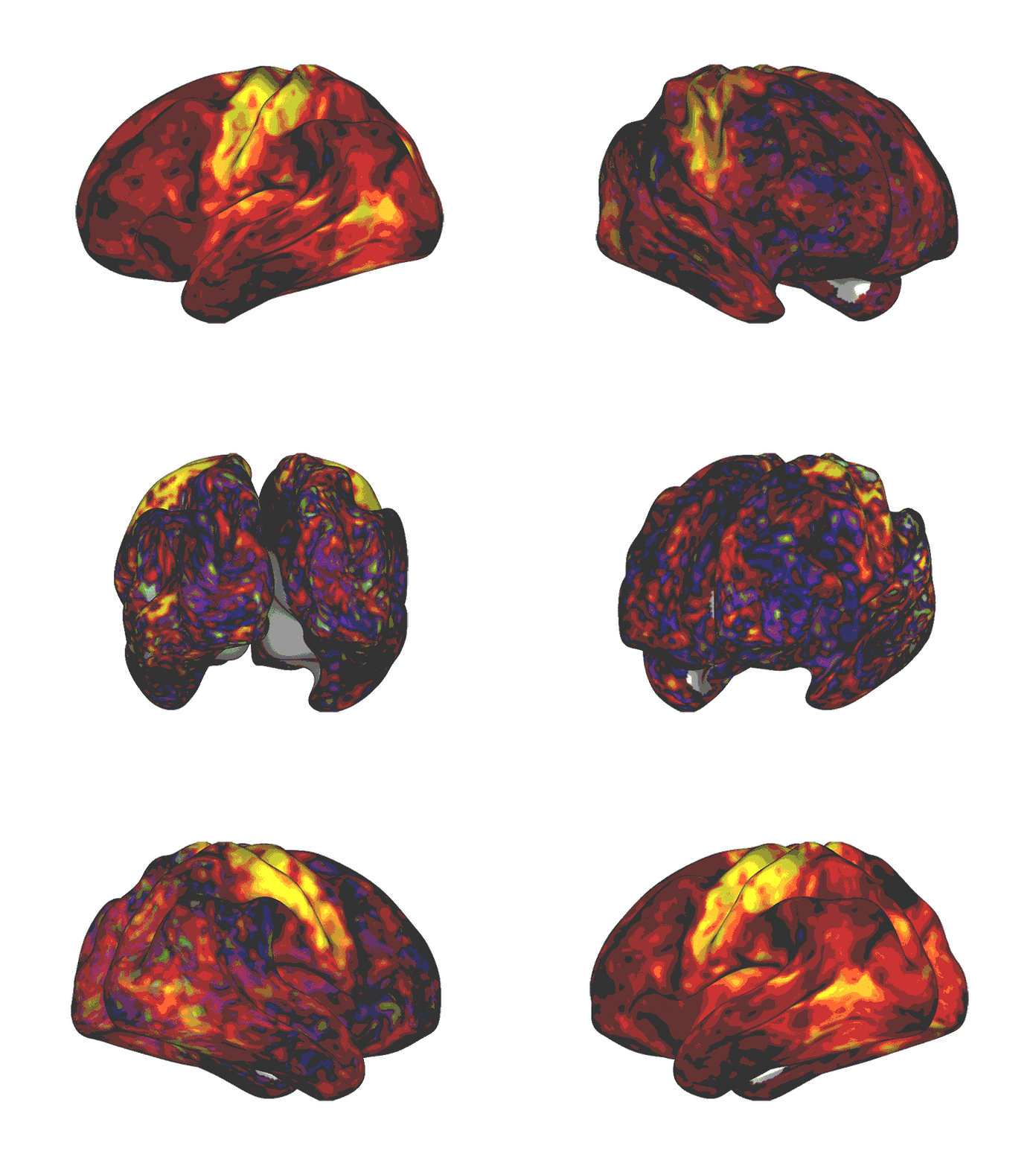
Brain scan rotating to show brain areas involved in wakefulness and reward.

Prescription stimulants, such as Ritalin and Adderall, are widely used to treat attention deficit hyperactivity disorder (ADHD), including in children. In the U.S., about 3.5 million kids ages 3 to 17 take an ADHD medication, a number that has increased as more children have been diagnosed with the neurodevelopmental disorder.

New ALS drug stabilizes decline with a trend toward improved strength, mobility for some (Links to an external site)

Rickey Malloy (left), who receives tofersen treatment for SOD1-ALS at WashU Medicine, plays a round of golf with his wife, Jenny, and their son, Kash.

Historically, people with amyotrophic lateral sclerosis (ALS) experience a relentless decline of neurological function that eventually robs them of the ability to move, speak, eat or breathe. Now, researchers from Washington University School of Medicine in St. Louis and collaborators report that long-term use of tofersen, a new drug approved by the Food and Drug […]

Congratulations to Neurology’s December 2025 SAFE accolade recipients

SAFE accolades - Neurology

Congratulations to the members of the Department of Neurology who received accolades through the Supporting a Fair Environment (SAFE) program! SAFE aims to improve the learning environment by promoting positive behaviors and managing concerns about learner mistreatment and unprofessional behaviors. SAFE accolades include treating others with dignity and respect, creating an environment that values diversity, […]