Why doesn’t deep-brain stimulation work for everyone? (Links to an external site)

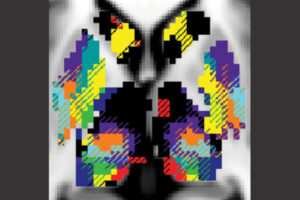
Brain networks corresponding to functions such as vision (blue) and attention (green) mingle and share information in structures deep inside the brain, as seen, for example, in the bottom right corner of this color-coded composite MRI image. Researchers at Washington University School of Medicine in St. Louis have mapped nine functional networks in the deep-brain structures of 10 healthy people, an accomplishment that could lead to improvements in deep-brain stimulation therapy for severe cases of Parkinson’s disease and other neurological conditions. (Image: Scott Marek)

People with severe Parkinson’s disease or other neurological conditions that cause intractable symptoms such as uncontrollable shaking, muscle spasms, seizures, obsessive thoughts and compulsive behaviors are sometimes treated with electric stimulators placed inside the brain. Such stimulators are designed to interrupt aberrant signaling that causes the debilitating symptoms. The therapy, deep-brain stimulation, can provide relief […]

Metabolic disturbance in the brain exacerbates, may forewarn Alzheimer’s pathology (Links to an external site)

CHICAGO — A better understanding of the metabolic processes in the brain — specifically disturbances resulting from neurodegenerative diseases — has important implications for potential treatments. The research was presented at Neuroscience 2019, the annual meeting of the Society for Neuroscience and the world’s largest source of emerging news about brain science and health.

Alzheimer’s research reset (Links to an external site)

© LIGHTSPRING/SHUTTERSTOCK.COM

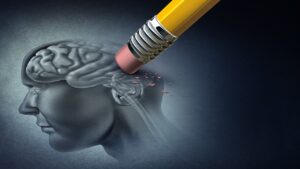
After some costly and disappointing drug trial failures, the field welcomes a funding surge, tools for tracking disease, and interdisciplinary collaborations to tackle one of science’s most stubborn puzzles. In the last five years, as several large clinical trials testing drugs for Alzheimer’s disease failed, the field came to a stark conclusion: These approaches did […]

Rineys give $15 million to develop, test therapies for neurodegenerative diseases (Links to an external site)

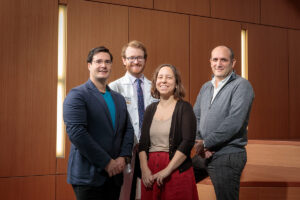
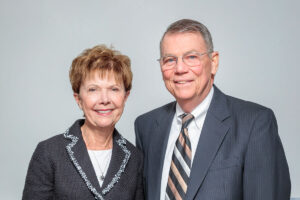
Rodger and Paula Riney have made a $15 million gift to Washington University School of Medicine in St. Louis, aimed at accelerating research and developing new treatments for Alzheimer’s disease and Parkinson’s disease.

Washington University School of Medicine in St. Louis has received a $15 million gift from Paula and Rodger Riney aimed at accelerating research and developing new treatments for two major neurodegenerative diseases:  Alzheimer’s disease and Parkinson’s disease. Of the gift, $10 million will support Alzheimer’s disease research, while $5 million will support studies of Parkinson’s […]