Pediatric clinic for Rett syndrome draws patients for multispecialty care, clinical trials (Links to an external site)

Kerrigan Waggenspack, 4, of Baton Rouge, La., cheers with her sister, Shea Rodriguez. Kerrigan has Rett syndrome, a condition that affects brain development. Her family travels to the Rett Spectrum Clinic at Washington University School of Medicine and St. Louis Children’s Hospital so Kerrigan can be seen by a multispecialty care team.

Families that have a child with Rett syndrome, a rare neurological disorder that almost exclusively affects females, often travel hundreds of miles to the Rett Spectrum Clinic in St. Louis — a collaboration between Washington University School of Medicine and St. Louis Children’s Hospital — for multispecialty care and access to innovative clinical trials.

Testing Inclusivity and Innovation Benefits All (Links to an external site)

Masked children in classroom

When the COVID-19 pandemic struck in the spring of 2022, students and staff at schools that serve children with intellectual and developmental disabilities (IDD) were left stranded. These students and staff faced unique circumstances because they could not always follow the CDC guidance on masking, testing, and social distancing due to the nature of these […]

COVID-19 infections increase risk of long-term brain problems (Links to an external site)

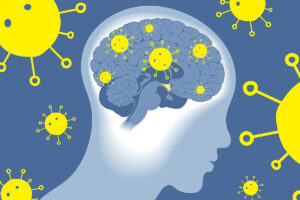
A comprehensive analysis of federal data by researchers at Washington University School of Medicine in St. Louis shows people who have had COVID-19 are at an elevated risk of developing neurological conditions within the first year after infection. Movement disorders, memory problems, strokes and seizures are among the complications.

If you’ve had COVID-19, it may still be messing with your brain. Those who have been infected with the virus are at increased risk of developing a range of neurological conditions in the first year after the infection, new research shows. Such complications include strokes, cognitive and memory problems, depression, anxiety and migraine headaches, according […]

Investigational drug for genetic form of ALS improves disease’s molecular signs (Links to an external site)

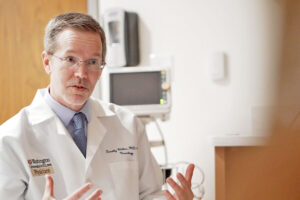
Timothy Miller, MD, PhD, talks with an amyotrophic lateral sclerosis (ALS) patient at Washington University School of Medicine in St. Louis. Miller led an international phase 3 clinical trial for a rare, inherited form of ALS. The trial, sponsored by the pharmaceutical company Biogen, showed that an investigational drug, known as tofersen, reduced molecular signs of the fatal disease, but at six months did not improve motor control and muscle strength. However, Miller and colleagues found evidence that longer-term use of the drug may help stabilize muscle strength and control.

An investigational drug developed to treat a rare, inherited form of amyotrophic lateral sclerosis (ALS) reduced molecular signs of the fatal, paralyzing disease and curbed neurodegeneration — but at the six-month mark, the drug did not improve motor control and muscle strength, according to results from a phase 3 clinical trial led by researchers at […]

Study points to new approach to clearing toxic waste from brain (Links to an external site)

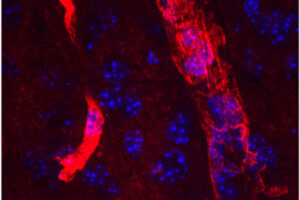
An extended form of the protein aquaporin 4 (red) lines the edges of tiny blood vessels in the brain. Cell nuclei are visible in blue. Researchers at Washington University School of Medicine in St. Louis have found a new druggable pathway that enhances the amount of long aquaporin 4 near blood vessels and increases the clearance of waste from the brain. The findings potentially could lead to new therapies to prevent Alzheimer’s dementia.

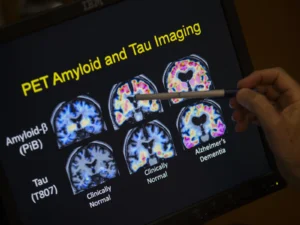
Researchers at Washington University School of Medicine in St. Louis have found a new druggable pathway that potentially could be used to help prevent Alzheimer’s dementia. Amyloid beta accumulation in the brain is the first step in the development of Alzheimer’s dementia. Scientists have poured countless hours and millions of dollars into finding ways to […]

Modeling personalized medicine for neurocritical illness (Links to an external site)

Precision medicine, which considers the unique characteristics of individuals to provide the most effective treatment, has been a goal of health care providers for decades. Now, it is a goal for helping those with critical neurological illnesses, such as stroke, traumatic brain injury and spine trauma, to track and predict secondary injury, such as seizures, […]