Patient defies genetic fate to avoid Alzheimer’s (Links to an external site)

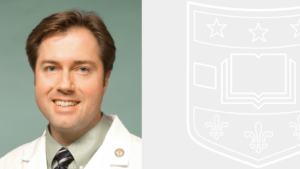
Doug Whitney, who lives near Seattle, Wash., inherited a mutation that has caused many family members to develop Alzheimer's disease at about age 50, yet he shows no sign of the illness at age 75. His case is the subject of a new study by WashU Medicine researchers that aims to identify potential routes to preventing or treating Alzheimer's based on Whitney's exceptional resilience to the disease.

Remarkably, Doug Whitney, 75, has escaped genetic destiny. Like many members of his family, Whitney inherited a rare genetic mutation that all but guarantees he would develop early-onset Alzheimer’s disease. But Whitney, whose relatives first showed symptoms of cognitive decline in their early 50s, remains mentally sharp with no signs of the devastating disease, and […]

Three Neurology nurses 2025 Excellence in Nursing Awards finalists!

ST. LOUIS MAGAZINE

Three of our incredibly hard-working nurses at WashU Medicine Department of Neurology were selected as 2025 Excellence in Nursing Awards finalists — Ashley Rabe, Wendy Sanders and Audra Stewart! The annual St. Louis Magazine Excellence in Nursing Awards, presented by BJC HealthCare and Goldfarb School of Nursing at Barnes-Jewish College, recognizes nurses across the St. Louis region […]

Jiang-Xie selected for 2024 WashU Medicine Bold Pioneer Award

WashU Medicine Bold Pioneer Award 2024 Winner: Li-Feng Jiang-Xie, PhD

Li-Feng Jiang-Xie, PhD, a postdoctoral research associate in WashU Medicine Department of Pathology and Immunology, has been selected as the winner of the 2024 WashU Medicine Bold Pioneer Award. A ceremony to celebrate the winner will be held Friday, May 2 at 4 p.m. in the Jeffrey T. Fort Neuroscience Research Building Auditorium on the […]

International Alzheimer’s prevention trial in young adults begins (Links to an external site)

Primary Prevention trial participant Hannah Richardson, 24, undergoes a clinical exam given by WashU Medicine neurologist Nupur Ghoshal, MD, PhD. The international trial, led by WashU Medicine, aims to determine whether stopping the early molecular changes that lead to symptomatic Alzheimer’s disease can prevent the disease from ever taking hold.

The first participants in an international clinical trial aimed at preventing Alzheimer’s disease in young adults at high risk of the disease have been enrolled. The trial, led by Washington University School of Medicine in St. Louis, aims to determine whether stopping the early molecular changes that lead to symptomatic Alzheimer’s disease can prevent the […]

Foster to be inducted into AOTA’s Roster of Fellows (Links to an external site)

Congratulations to Erin Foster, PhD, OTD, OTR/L who will receive the American Occupational Therapy Association’s (AOTA’s) Roster of Fellows Award at AOTA’s Inspire 2025 Annual Conference & Expo in Philadelphia, Pa. The Roster of Fellows recognizes occupational therapists who through their knowledge, expertise, leadership, advocacy, and/or guidance have made a significant contribution over time to […]

Lauber, Mallmann and Musser announced as Neurology Staff Employees of the Quarter

Lauber, Mallmann and Musser

The Department of Neurology congratulates three staff members for being awarded the Neurology Staff Employees of the Quarter for Q2 FY25. The department accepts nominations for three award categories to highlight the dedication and accomplishments of our staff members — clinical, research and administration. Clinical Staff Employee of the Quarter Joanne Lauber Clinical Nurse CoordinatorSection […]

Brains of people with sickle cell disease appear older (Links to an external site)

A new study led by WashU Medicine researchers has found older-looking brains in adults with sickle cell disease, helping to explain the cognitive challenges experienced by such individuals. A brain image from a healthy individual (left) shows a larger brain with more white matter compared with a brain image from a patient with sickle cell disease (right). Healthy individuals experiencing economic deprivation also had more-aged appearing brains.

Individuals with sickle cell disease – a chronic illness where misshapen, sticky blood cells clump together, reducing oxygen delivery to organs – are at a higher risk for stroke and resulting cognitive disability. But even in the absence of stroke, many such patients struggle with remembering, focusing, learning and problem solving, among other cognitive problems, […]

New Qalsody Results Bring Hope for Recovery of Lost Function and More Time (Links to an external site)

For decades, the general consensus among neurologists and neuroscientists has been that ALS treatments would only be able to slow down or stop further progression of the disease. Function that had already been lost would probably not be recovered. But now, evidence is emerging that not only is functional improvement possible, it’s happening for some people […]

Fatal neurodegenerative disease in kids also affects the bowel (Links to an external site)

Researchers at WashU Medicine have described the neurodegeneration that occurs in the nervous system of the bowel in Batten disease, a rare and fatal genetic condition. In their latest study, a team led by Jonathan Cooper, professor of pediatrics (left), showed that gene therapy to the bowel in mice modeling Batten disease reduced symptoms and extended lifespan. Also pictured are co-first authors Ewa Ziółkowska (center), a postdoctoral research associate, and Matt Jansen, a graduate student. (Photo: Matt Miller/WashU Medicine)

As a leading researcher of rare diseases that affect children’s brains, Jonathan D. Cooper, PhD, thought little about the gastrointestinal (GI) system. That is, until the parents of children with a condition that Cooper studies urged him to investigate why debilitating digestive issues troubled their kids, who suffer from an incurable and fatal neurodegenerative brain condition […]

Could inhaling xenon gas help treat Alzheimer’s? A new mouse study suggests it might (Links to an external site)

A medical device used for xenon therapy. Adobe

The gas xenon, like the other noble, or inert, gases, is known for doing very little. The class of elements, because of its molecular structure, don’t typically interact with many chemicals.  But a new mouse study shows one possible use case for xenon — as a treatment for Alzheimer’s disease. The paper, published Wednesday in Science Translational […]